
June 3, 2022
Easy Plant Propagation Tips for Beginners
Easy Plant Propagation Tips for Beginners
Want some new plants without buying any? Propagation is a delightful part of being a plant parent and can fill your house (and your friends’ houses) with endlessly multiplying plants.
If you’ve grown succulents from cut leaves, helped a pothos sprout new roots in water, or divided the roots of a too-crowded potted plant, then you’re already experienced in plant propagation.
Basics of Plant Propagation
So what exactly is plant propagation? A simple way of putting it: Propagating is the process of making more plants without seeds. The scientific explanation: Propagation is asexual plant reproduction.
In real-world terms, plant propagation means you’re getting more new plants just from one single plant parent. Yes, plant propagation is cloning!
For the most success, follow a few basic tips when multiplying your plants:
- Propagate during a plant’s typical growing season (typically spring and summer).
- Always use clean, sterilized tools for cutting and separating.
- Gather all your equipment before you start.
- Avoid exposing bare roots and fresh cuttings for too long; get your new plants in soil or water immediately!
- Care for your newly propagated plants carefully and with kind attention. They’re brand new babies!
Plant Propagation Methods
There are a wide variety of methods for plant propagation. Which process you’ll use is up to the kind of plant you’re working with and what equipment you have available. Let’s go over the most common techniques to help you get the best results every time.
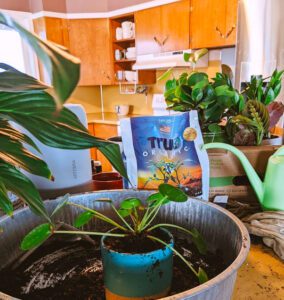
Root Division
Division is the process of separating one plant into two or more at the roots. It takes patience, attentiveness, and dexterity, so it’s best to choose this method once you already have a bit of experience with plant propagation, repotting, and caring for new plants.
Lay out all the equipment you need beforehand. You don’t want your plant’s exposed roots drying out while you find your container, soil, and tools!
Start by gently removing the parent from its pot and placing it on a clean surface or towel. If the root ball is very densely packed, delicately shake or “tickle” the roots to help them get a bit looser.
Examine the root mass for places that are healthy and can be separated relatively easily. You may need to cut the plant’s roots to separate them. If you do, be sure you use a very sharp, very clean tool. Be gentle! Make sure that the roots stay intact.
It’s important to replant the divided plants as soon as possible in new potting soil.
Best plants for root division:
- Pilea peperomioides
- Many types of ferns
- ZZ plant
- Snake plant

Stem Cuttings
Propagating a new plant from a cutting is probably the most popular method of multiplying houseplants. And it’s pretty simple if you follow a few rules:
- Take cuttings from healthy stems and plants only!
- Don’t cut from stems when they’re flowering.
- Cut below leaf nodes.
- Cut with a very sharp, clean tool.
To get the best cutting, first clean (and perhaps sharpen) your cutting tool. Garden shears, knives, or kitchen scissors work best.
Find a new leaf node, the bumpy joint along a stem. Locate a healthy, sturdy stem with rich color and happy, springy leaves.
Try to find a node that is at least 3 inches away from the top leaf. Cut just below the node (closer to the plant’s roots). Your new plant’s roots will start to grow from this node.
You can either root your new cutting in water or directly in soil! If you place the cutting directly into soil, plant it in a very small hole that’s snug for the stem. We like to use a pencil or crochet hook!
Best plants for growing from stem cuttings:
- Pothos
- Tradescantia
- Umbrella plant
- Philodendron
Leaf Cuttings
There are a few plants, including most succulents and cacti, where plant propagation can happen just from a leaf.
This process is tricky, and success rates can be lower than other methods, so don’t beat yourself up if it doesn’t work out on your first try (or second, third, and so on…).
Just like cutting from a stem, locate a leaf that is very healthy, sturdy, and “springy.” If you’re working with succulents, leaves may simply fall off — you can propagate those!
Cut the leaf off the stem and let the leaf dry out for 2-3 days, just enough so to slightly scab over. This will prevent the leaf from soaking up too much water and rotting.
Place the leaf into fresh potting soil, with at least one-third of the leaf in the soil. Gently press your fingers all around the inserted leaf to firmly ground it in the soil.
Best plants for growing from leaf cuttings:
- Aloe vera
- Jade plant
- Most types of cacti
- Most types of succulents
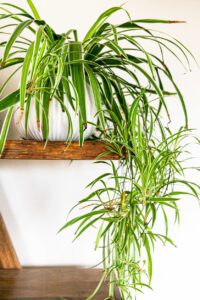
Plantlets
Also called pups or offsets, pups are itty bitty baby plants that naturally sprout from the mother plant. Pups are “ready-to-go” miniature plants that naturally form at the ends of branches or vines.
Spider plant (Chlorophytum comosum) is likely the most commonly pup-growing plant. Have you seen the tiny, spiky orbs dangling from a big spider plant? Those are its pups!
Plant propagation from a pup is similar to growing from a cutting. Below the soil, remove the pup’s connecting roots from the mother plant with a sharp, clean blade and plant it in nutrient-rich potting soil.
Just like stem cuttings, you can root plantlets in soil or in water. All of the other rules for propagating apply: clean your tools, plant in rich soil, and choose healthy plants and pups only.
Best plants for growing from pups:
- Spider plant
- Bromeliad
- Tillandsia (air plants)
- Aloe
Caring for New Baby Plants
Now you’ve got some new pants to care for!
Remember: Plant propagation is major surgery. Give your plant lots of love and attention: place it in bright light, away from cold drafts, and make sure to water it immediately. Soil should be kept moist but not damp. Be mindful not to overwater your new plant because that waterlogs the roots and doesn’t allow them to breathe fully.
If you’re rooting new plants in water, give them fresh water every couple of weeks to avoid unwanted bacterial or fungal growth. After roots are a few inches long, you may want to pot the fledgling plant in soil. But you don’t have to — some hardy houseplants can grow in water indefinitely (and now you’re cultivating with an aquaponics operation!).
The post-plant propagation period can be a slow-growth time for your new plants, so be patient. You may not see new growth or super-springy stems right away.
Pro tip: Give your new green babies a small dose of our Liquid All-Purpose Plant Food during their first or second water after planting in soil to help them stay healthy.
The best part of plant propagation? Gifting your newly rooted plants! They make perfect housewarming presents or work-from-home officemates.
Happy growing!

Show us your True Organic Plants
#GrowWithTrue

www.trueorganic.earth